When someone sends you a text that says “WTV Meaning in Text,” you may pause and wonder what they mean. Is the person saying they do not care? Are they annoyed? Or is “wtv” simply a quick way to say “whatever”?
If you have seen WTV Meaning in Text message searches, you are not alone. Short slang terms like WTV are common in texting, Snapchat, Instagram, TikTok comments, gaming chats, and dating apps. The hard part is that the same short word can sound different depending on the conversation.
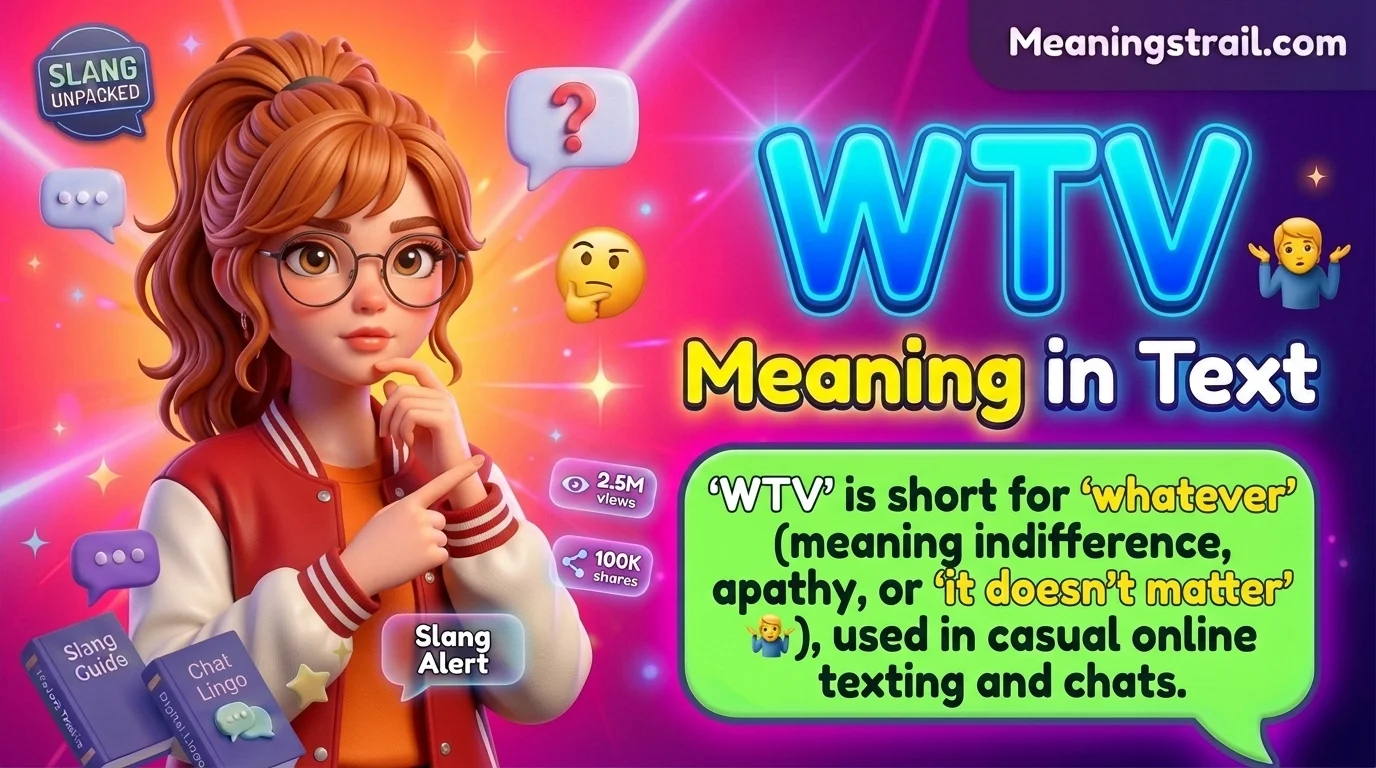
In most cases, WTV means “whatever.” People use it when they want to say that something does not matter much to them, they are okay with any choice, or they do not want to continue talking about a topic.
However, tone matters. “Wtv, you choose” can sound relaxed, while “wtv” by itself may sound cold or annoyed.
This guide explains what WTV means, how people use it, what it says about tone, and how you can reply without misunderstanding the message.
What Does “wtv meaning in text message” Mean in Text?
WTV usually means “whatever” in a text message. It is a short form used in casual digital communication. Depending on context, it can mean “I do not mind,” “it does not matter,” “anything is fine,” or “I do not want to discuss this anymore.” Its tone can be casual, dismissive, annoyed, or neutral.
For example:
- “Wtv, I’m okay with it.” = Whatever, I am okay with it.
- “Wtv you want.” = Whatever you want.
- “Wtv.” = Whatever / I do not care.
- “Pick wtv you like.” = Pick whatever you like.
The exact meaning depends on the words around it and the relationship between the people texting.
The Most Common Meanings of “wtv meaning in text message”
1. Whatever
The most common meaning of WTV is “whatever.”
This is simply a shortened version of the word. People often use it because texting is fast, and slang makes messages shorter.
Example:
Person A: “Pizza or burgers?”
Person B: “Wtv works.”
Here, WTV means that either choice is fine.
Another example:
“Wtv you want is fine with me.”
This means the person does not have a strong preference.
2. I Do Not Mind
WTV can also mean that the person has no strong opinion.
For example:
“Where should we go?”
“Wtv, you decide.”
The person may not be upset at all. They simply want the other person to choose.
In this use, WTV is close to:
- Anything is fine.
- You choose.
- I do not mind.
- Either one works.
The surrounding words usually make this meaning clear.
3. I Do Not Care
Sometimes WTV has a stronger meaning.
If someone writes:
“Wtv, do what you want.”
They may be saying that they do not care about the decision.
This can sound distant or annoyed, especially when the conversation is already tense.
For example:
“I told you why I did it.”
“Wtv.”
Here, WTV may sound like the person does not want to hear more.
4. Drop the Topic
WTV can also be used to end a discussion.
Someone might say:
“Wtv, I don’t want to argue.”
In this case, WTV is not really about making a choice. It signals that the person wants to move on.
This use is common during small arguments between friends, couples, siblings, or people who disagree online.
5. A Casual Short Form
Sometimes WTV has almost no strong emotion.
For example:
“Wtv happens, happens.”
The person may simply be texting quickly and using slang instead of the full word “whatever.”
In casual conversations, short forms like WTV are often used without much thought.
How “wtv meaning in text message” Is Used in Real Conversations
Friends & Casual Texting
Friends often use WTV because it is quick and informal.
For example:
Friend: “Movie at 7 or 9?”
You: “Wtv, 9 is good.”
Here, the message is relaxed.
Another example:
“Bring wtv snacks you want.”
This means the person is not asking for a specific snack.
Among close friends, WTV usually does not need to sound rude. The relationship helps explain the tone.
However, a single “wtv” can feel different.
Friend: “Are you still mad?”
You: “Wtv.”
That response may sound like the person is annoyed or does not want to talk.
Instagram & Snapchat
WTV is also common on social media chats and replies.
Someone may send:
“Wtv girl.”
or
“Wtv, I’m not explaining again.”
On Instagram or Snapchat, people often use very short messages because conversations move quickly.
WTV may appear in:
- Direct messages
- Story replies
- Comments
- Group chats
- Snapchat messages
- Short captions
The meaning still depends on context.
If someone writes “wear wtv you want,” the tone is likely neutral.
If someone replies only “wtv” after an argument, it may sound dismissive.
Dating Apps
On dating apps, WTV can have several tones.
For example:
“Wtv you want to do tonight?”
This may simply mean:
“Whatever you want to do tonight?”
But if someone says:
“Wtv, it’s up to you.”
it could sound uninterested, depending on the conversation.
Dating chats rely heavily on tone because text does not include voice or facial expressions. A short answer can therefore be interpreted in several ways.
If you receive WTV from someone you are dating, look at the full conversation instead of judging the word alone.
Gaming & Online Communities
Gamers and online communities use WTV in fast conversations.
For example:
“Wtv map you want.”
This means the person is okay with any map.
Another example:
“Wtv, let’s just play.”
Here, WTV can show that the player wants to stop discussing the issue and start the game.
In fast-moving group chats, abbreviations save time. WTV is useful because most people understand it without needing an explanation.
Work or Professional Chat
WTV is much less suitable for professional communication.
A friend may understand:
“Wtv works.”
But a manager, customer, teacher, client, or coworker may see the same message as careless or disrespectful.
Instead of WTV, use:
- Whatever works best for you.
- Either option is fine.
- I am flexible.
- I do not have a preference.
- Please choose whichever works best.
Professional messages need clear wording because there is less room for slang-based tone.
Is “wtv meaning in text message” Rude, Flirty, or Offensive?
WTV is not automatically rude, flirty, or offensive. Its tone depends on the situation.
When WTV Feels Neutral
WTV can be completely neutral when someone is talking about a simple choice.
“Pizza or pasta?”
“Wtv is fine.”
There is no obvious negative feeling here.
When WTV Feels Rude
WTV can sound rude when it appears alone or follows an argument.
For example:
“Why did you ignore my message?”
“Wtv.”
The short response may sound like the person does not care about your feelings.
Similarly:
“I spent all day helping you.”
“Wtv.”
This could sound dismissive.
When WTV Feels Flirty
WTV is not normally a flirting word.
However, it can appear in a playful or flirty conversation.
For example:
“Wear wtv you want, you’ll look good anyway.”
Here, WTV itself is not flirty. The rest of the sentence creates the flirty tone.
So do not assume WTV means romantic interest.
When WTV Feels Annoyed
A short “wtv” can sometimes show frustration.
This is especially true when the conversation has already become tense.
For example:
“I already told you three times.”
“Wtv.”
The person may be signaling that they want to stop discussing it.
Why Context Matters
Text messages do not show facial expressions, voice, or body language. Because of this, one small abbreviation can feel stronger than intended.
Compare:
“Wtv haha”
with:
“Wtv.”
The first may feel casual. The second may feel cold.
Punctuation, previous messages, and the relationship between the people can all change the tone.
How to Respond When Someone Says “wtv meaning in text message”
Your response should depend on what the person seems to mean.
Casual Replies
If the message feels relaxed, you can answer naturally:
- “Okay, sounds good.”
- “Cool, you pick.”
- “Works for me.”
- “Sure, anything is fine.”
- “Alright.”
Example:
Them: “Wtv you want.”
You: “Let’s do pizza then.”
Funny Replies
If you are close friends and the conversation is playful, you can joke.
For example:
- “Wow, very specific.”
- “The famous ‘wtv’ answer.”
- “Okay, Mr. Whatever.”
- “Your decision-making skills are amazing.”
Use humor only when you know the other person will understand your joke.
Neutral Replies
If you are unsure about their tone, keep your answer simple.
You could say:
“Okay, what do you prefer?”
or
“No worries. I just wanted to check.”
This avoids creating an argument over a small abbreviation.
Professional Replies
If WTV appears in a work-related chat, focus on the actual decision.
For example:
Them: “Wtv works.”
You could reply:
“Thanks. I’ll go with the 3 PM option.”
If you need more information:
“Which option would you prefer?”
Clear language is usually better than matching slang in professional communication.
Common Misunderstandings About “wtv meaning in text message”
Misunderstanding 1: WTV Always Means “I Don’t Care”
Not always.
“Wtv you choose is fine” can simply mean the person has no preference.
The phrase may be completely friendly.
Misunderstanding 2: WTV Is Always Rude
WTV can sound rude, but it is not automatically rude.
Compare:
“Wtv works for me!”
with:
“Wtv.”
The first sounds more open. The second can feel dismissive.
Misunderstanding 3: WTV Is a Romantic Slang Term
WTV does not normally mean anything romantic.
If someone uses WTV while flirting, the romantic meaning comes from the rest of the message, not from WTV itself.
Misunderstanding 4: WTV Has Only One Meaning
The main meaning is “whatever,” but the intended message can vary.
It can mean:
- Whatever
- I do not mind
- Anything is okay
- I do not care
- Let us drop the topic
The context decides which meaning fits.
Misunderstanding 5: A Short Reply Always Means Anger
Not necessarily.
Some people naturally text with short answers. They may use WTV because they are busy, typing quickly, or simply prefer slang.
Look at their normal texting style before assuming they are upset.
Similar Slang Terms You Should Know
1. Whatever
The full word behind WTV. It can mean “anything,” “I do not mind,” or “I do not care.”
2. IDC
Means “I don’t care.” It can sound stronger or more direct than WTV.
3. IDK
Means “I don’t know.” It shows uncertainty or a lack of information.
4. NVM
Means “never mind.” People use it when they no longer need an answer or want to drop a topic.
5. TBH
Means “to be honest.” It is often used before a personal opinion.
6. IMO
Means “in my opinion.” It introduces someone’s personal view.
7. Tbh
Often used before a direct or honest statement, such as “tbh, I like the first one.”
8. FR
Means “for real.” It can show agreement or emphasis.
9. RN
Means “right now.” It refers to the current moment.
10. LMK
Means “let me know.” It is common when asking someone to provide information later.
11. ILY
Means “I love you.” It is often used in close or romantic relationships.
12. IRL
Means “in real life.” It is often used when talking about offline life compared with online activity.
Knowing these terms can make texting easier, especially when talking with people who use a lot of internet slang.
When You Should Avoid Using “wtv meaning in text message”
Professional Settings
Avoid WTV in formal emails, job applications, business messages, customer service conversations, and important workplace communication.
Instead of:
“Wtv works.”
write:
“Either option works for me.”
This sounds clearer and more professional.
Cross-Cultural Chats
Not everyone understands English texting slang in the same way.
Someone who is learning English may not know that WTV means “whatever.”
Even if they understand it, they may not understand its tone.
If clear communication matters, use the full word.
Sensitive Situations
Avoid WTV when someone is sharing something serious or emotional.
For example, if someone tells you:
“I’m really upset about what happened.”
Replying “wtv” can sound uncaring.
Sensitive conversations need more direct and thoughtful language.
Instead, try:
“I understand. Do you want to talk about it?”
Important Decisions
WTV may create confusion when a decision really matters.
If someone asks:
“Should we submit the first version or the second version?”
Instead of saying:
“Wtv.”
give a clear answer.
For important topics, clarity is better than speed.
FAQs
What does WTV mean in text messages?
WTV usually means “whatever.” It can mean that someone does not mind, has no preference, or does not want to continue discussing a topic.
Is WTV short for whatever?
Yes. In most texting situations, WTV is a shortened form of “whatever.” It is mainly used in casual online communication.
Does WTV mean I don’t care?
Sometimes. WTV can mean “I don’t care,” but it can also simply mean “I don’t mind” or “anything is fine.” The conversation gives the real meaning.
Is WTV rude in texting?
WTV is not always rude. A phrase like “wtv works for me” can sound neutral, while a one-word “wtv” during an argument may sound dismissive.
What does WTV mean from a girl?
WTV has the same basic meaning regardless of who sends it. A girl may use it to mean “whatever,” “I don’t mind,” or “I don’t care,” depending on the context.
What does WTV mean from a guy?
A guy using WTV usually means “whatever.” It does not automatically show anger, boredom, or romantic interest. Look at the rest of the conversation to understand the tone.
How should I reply to WTV?
If the message is casual, you can reply with “Okay,” “Sounds good,” or make the decision yourself. If it seems cold, ask a simple question such as “Are you okay?” rather than assuming they are angry.
Final Thoughts.
The main wtv meaning in text message is simple: “whatever.” It is a common texting shortcut used in casual chats, social media, gaming, and online conversations.
But the meaning behind the word can change with context. WTV may mean “I don’t mind,” “anything is fine,” “I don’t care,” or “let’s drop this topic.”
The most important thing is not to judge the word by itself. Look at the full sentence, the conversation before it, the punctuation, and the person’s normal texting style.
If someone says “wtv you want,” they may simply be giving you the choice. If they reply with only “wtv” during an argument, they may be showing frustration or trying to end the conversation.
For casual texting, WTV is perfectly common. For work, serious conversations, or situations where clarity matters, using the full word “whatever” or a clearer phrase is usually a better choice.
Understanding slang is less about memorizing every abbreviation and more about understanding context. Once you know that, WTV is one of the easier texting terms to understand and use.

Grace Wilson is a passionate writer and language enthusiast who enjoys exploring word meanings and making complex ideas easy to understand.