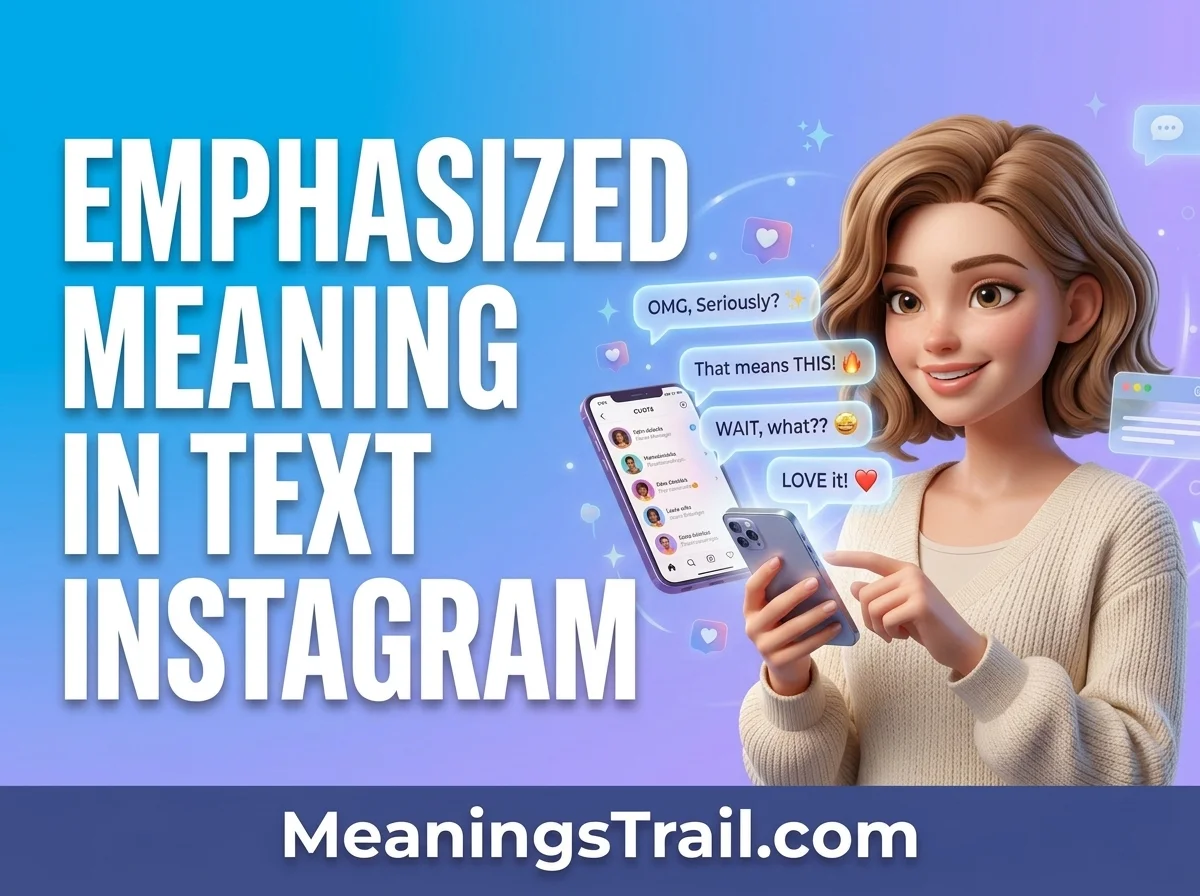
When someone makes a word look stronger in a text, you may stop and wonder what they really mean. Did they add extra feeling? Are they angry? Are they trying to flirt, joke, or simply make one part of the message clear? This is why people search for the “EMPHASIZED MEANING IN TEXT“.
Text messages do not have voice tone, facial expressions, or body language. Because of this, small changes in how a word is written can carry extra meaning. A person may use capital letters, repeated letters, bold-looking text, punctuation, or another typing style to make a word stand out.
The good news is that emphasis does not always mean something negative. Its meaning depends on the word, the message around it, the relationship between the people, and the situation.
In this guide, you will learn what emphasized text means, how people use it in everyday chats, when it sounds friendly or serious, and how you can respond without misunderstanding the message.
What Does “Emphasized Meaning in Text” Mean in Text?
Emphasized meaning in text means giving extra attention, stress, or importance to a particular word or idea. People may use capitalization, repeated letters, punctuation, formatting, or wording to make something stand out. Depending on context, emphasis can show excitement, urgency, surprise, anger, affection, humor, or strong agreement.
Common interpretations include:
- Extra importance: The writer wants you to notice something.
- Strong emotion: The person feels excited, shocked, annoyed, or happy.
- Clarity: They want to make sure their point is understood.
- Tone: The emphasis may change how the whole message feels.
For example, “I said yes” is simple. “I said YES” gives the word “yes” much more weight.
The Most Common Meanings of “Emphasized Meaning in Text”
Emphasis can mean different things depending on the conversation. There is no single emotion behind every emphasized word. The best way to understand it is to look at the full message.
1. It Shows Importance
One of the most common reasons people emphasize a word is to show that it matters.
Someone may want you to pay attention to one detail because it affects the conversation.
Example:
“Please bring the blue folder.”
The person could be emphasizing “blue” because there are several folders and they do not want you to bring the wrong one.
In this case, there is no anger or hidden emotion. The emphasis simply makes the instruction clearer.
2. It Shows Strong Emotion
An emphasized word can show that someone has a strong reaction.
This may happen when a person is excited, shocked, frustrated, surprised, or extremely happy.
Example:
“That was SO good!”
The word “SO” adds emotional strength. The person is not just saying the food was good. They are saying they enjoyed it a lot.
The same idea can work with negative emotions:
“I REALLY told you.”
Here, “REALLY” may show frustration or a strong attempt to prove a point.
3. It Shows Excitement
People often use emphasis when they are excited.
This is common in casual texting, group chats, social media, and conversations between close friends.
Example:
“WE WON!”
The capital letters make the message feel louder and more energetic.
Another example is:
“No wayyyy!”
The repeated letters can add excitement, surprise, or disbelief.
4. It Shows Urgency
Emphasis can also tell someone that something needs attention quickly.
Example:
“CALL ME NOW.”
This feels much more urgent than:
“Call me now.”
The capital letters may signal that the person considers the situation important.
However, urgency is not always anger. Someone could be dealing with an emergency or simply trying to make sure the other person notices the message.
5. It Shows Anger or Frustration
Sometimes emphasis makes a message sound harsh.
Capital letters are especially important here because a message written entirely in uppercase can feel like shouting.
Example:
“I TOLD YOU ALREADY.”
This likely sounds frustrated.
Still, context matters. A friend might write:
“I LOVE THIS SONG!”
The uppercase letters show excitement, not anger.
That is why you should not judge the tone from capitalization alone.
6. It Shows Sarcasm
Emphasis can help a person make sarcasm easier to notice.
Example:
“Yeah, that was REALLY smart.”
Depending on the situation, “REALLY” could suggest the opposite. The person may actually mean that the action was not smart at all.
Sarcasm is difficult in text because the reader cannot hear the speaker’s voice. Emphasis can help, but it does not always make the meaning clear.
7. It Adds Humor
Friends often emphasize words simply to make a message funnier.
Example:
“You are officially THE most dramatic person I know.”
The capitalized word makes the sentence feel playful.
The meaning is not necessarily serious. The writer may be teasing someone they know well.
8. It Shows Affection
Emphasis can also appear in romantic or affectionate messages.
Example:
“I miss you SO much.”
The extra stress makes the emotion stronger.
A person may also use repeated letters:
“I love youuu.”
Here, the extended spelling can make the message feel softer, warmer, or more playful.
9. It Shows Contrast
Sometimes emphasis is used to compare two ideas.
Example:
“I said I liked it, not that I LOVED it.”
The emphasized word helps show the difference between “liked” and “loved.”
This use is common when someone wants to correct a misunderstanding.
10. It Makes a Correction Clear
People may emphasize a word when they want to correct someone.
Example:
“I said Thursday, not Tuesday.”
The emphasis helps identify exactly what was wrong.
This does not automatically mean the person is angry. It can simply be a way to make the correction easy to understand.
How “Emphasized Meaning in Text” Is Used in Real Conversations
Friends & Casual Texting
Friends use emphasis very freely. They may capitalize words, repeat letters, add punctuation, or stretch a word to match their mood.
For example:
“That movie was SO funny.”
“Broooo, you actually did it!”
“NO WAY.”
In casual conversations, emphasis often adds personality. It can make a message feel more natural and expressive.
The relationship also matters. A short message such as “OKAY.” might feel cold from one person but completely normal from another.
Close friends usually understand each other’s texting habits. A person who always uses capital letters may not be trying to sound angry.
Instagram & Snapchat
Social media chats use emphasis to make reactions stronger.
Someone might reply:
“THIS PHOTO.”
That could mean they really like the photo.
A Snapchat message such as:
“You looked SO good.”
could sound like a strong compliment.
On Instagram, users may also use repeated letters:
“STOPPP.”
Depending on context, this might mean “That is so funny,” “You look amazing,” or “I cannot believe this.”
The surrounding conversation is important.
Dating Apps
Emphasis can change the tone of a dating conversation quickly.
Compare:
“I like your profile.”
with:
“I REALLY like your profile.”
The second message sounds more interested.
Similarly:
“You’re cute.”
is fairly direct.
“You’re SO cute.”
usually sounds warmer and more excited.
However, emphasis alone does not prove romantic interest. Someone can strongly compliment a person without flirting.
Look at the whole conversation before deciding what the writer intends.
Gaming & Online Communities
Gamers and online communities often use exaggerated emphasis for reactions.
Examples include:
“THAT WAS INSANE.”
“YOU CLUTCHED IT.”
“NOOOOO.”
“LET’S GOOOO!”
These messages are usually emotional reactions rather than formal statements.
Online groups also develop their own communication styles. What looks aggressive to one person may be normal excitement in another community.
Work or Professional Chat
Professional messaging requires more care.
A coworker writing:
“Please send the file TODAY.”
may sound demanding.
The same message could be written more calmly:
“Please send the file today.”
In work chats, too much emphasis can make a message seem angry, impatient, or unprofessional.
If a detail is important, it is often better to explain why it matters instead of relying on capital letters.
For example:
“Could you please send the final file today? We need it for tomorrow’s meeting.”
This gives the reader useful context without creating unnecessary tension.
Is “Emphasized Meaning in Text” Rude, Flirty, or Offensive?
Emphasized text can be rude, flirty, friendly, serious, funny, or completely neutral. The writing style alone does not decide the meaning.
Context is the biggest factor.
When It Feels Positive
Emphasis can feel positive when someone is excited or supportive.
For example:
“YOU DID IT!”
This sounds encouraging.
Another example:
“I REALLY enjoyed talking to you.”
This may sound warm and interested.
When It Feels Negative
Emphasis can feel negative when the message contains blame, commands, or criticism.
For example:
“STOP DOING THAT.”
This clearly sounds strong.
But even here, the situation matters. A parent, friend, coworker, or stranger may use the same words for different reasons.
When It Feels Flirty
Emphasis can add warmth or attraction.
For example:
“You look SO good tonight.”
This may sound flirty.
But it is not proof of romantic interest. Some people naturally use strong language when giving compliments.
When It Feels Rude
Emphasis may feel rude when it appears to shout at someone, especially in a professional or sensitive conversation.
For example:
“I ALREADY EXPLAINED THIS.”
The reader may feel criticized.
A calmer version would be:
“I think I explained this earlier, but I can go over it again.”
The meaning is similar, but the second version reduces tension.
How to Respond When Someone Says “Emphasized Meaning in Text”
The best response depends on the tone of the original message.
Casual Replies
If a friend is using emphasis casually, you can match their energy.
Examples:
- “Haha, I know!”
- “RIGHT?”
- “Exactly!”
- “For real.”
- “I noticed that too.”
Funny Replies
If the message is playful, a humorous response can work.
Examples:
- “Okay, I heard you.”
- “Why are we yelling?”
- “Message received.”
- “That word got promoted.”
- “The capital letters are doing a lot here.”
These replies work best with people who understand your humor.
Neutral Replies
If you are unsure about the person’s tone, stay simple.
Examples:
- “Got it.”
- “Understood.”
- “Okay, thanks for clarifying.”
- “I see what you mean.”
- “Thanks for letting me know.”
A neutral response gives you time to understand the situation without making assumptions.
Professional Replies
In a work setting, keep your answer calm and direct.
Examples:
- “Understood. I’ll take care of it.”
- “Thanks for clarifying.”
- “Got it. I’ll send the file today.”
- “Understood. I’ll prioritize this.”
You do not need to copy the other person’s capitalization or emotional style.
Common Misunderstandings About “Emphasized Meaning in Text”
Misunderstanding 1: Capital Letters Always Mean Anger
This is one of the biggest mistakes.
Capital letters can mean shouting, but they can also mean excitement.
Compare:
“I AM SO EXCITED!”
with:
“I TOLD YOU NOT TO DO THAT.”
The first is positive excitement. The second sounds frustrated.
Misunderstanding 2: Emphasis Always Means Flirting
It does not.
Someone saying:
“That is SO cool!”
may simply be excited about something.
Romantic meaning requires more context, such as personal compliments, romantic language, or repeated signs of interest.
Misunderstanding 3: Repeated Letters Have One Fixed Meaning
They do not.
“Okayyy” could sound playful, uncertain, teasing, annoyed, or affectionate depending on the conversation.
The same spelling can have different meanings between different people.
Misunderstanding 4: Punctuation Always Means Anger
A message such as:
“Really?!”
can show surprise rather than anger.
Likewise:
“YES!!!”
usually shows excitement.
Punctuation adds emotion, but it must be read with the rest of the message.
Misunderstanding 5: Short Messages Are Automatically Cold
A short message may simply be quick.
“YES” can mean excitement, agreement, or urgency. You need the surrounding conversation to know which one applies.
Misunderstanding 6: Text Tone Is Always Obvious
Text communication removes many clues we normally use in face-to-face conversations.
That means readers sometimes add their own emotion to a message.
If a message seems confusing, asking a simple question can prevent a bigger misunderstanding.
For example:
“Are you serious, or are you joking?”
That is often better than assuming the worst.
Similar Slang Terms You Should Know
Here are related texting terms and styles that can help you understand emphasis:
- ALL CAPS — Writing words in uppercase to make them stand out or show strong emotion.
- Stretching words — Adding letters, such as “soooo,” to make a feeling stronger or more playful.
- Intensifier — A word such as “really,” “very,” or “so” used to increase emotional strength.
- Tone — The emotional feeling a message seems to have.
- Shouting in text — A common description for messages written in full uppercase, especially when they feel aggressive.
- Emotional texting — Writing in a way that strongly shows excitement, anger, affection, surprise, or another feeling.
- Sarcasm — Saying something in a way that may mean the opposite of the literal words.
- Dry texting — Short or low-energy messages that may seem uninterested or distant.
- Texting tone — The overall feeling created by someone’s word choice, punctuation, formatting, and style.
- Reaction text — A short message mainly used to show an emotional response, such as “WHAT?!” or “NO WAY!”
- Tone indicator — A marker used online to clarify the intended tone of a statement.
- Highlighting — Making one word or idea stand out so the reader pays extra attention to it.
When You Should Avoid Using “Emphasized Meaning in Text”
Emphasis is useful, but it is not right for every situation.
Professional Settings
Avoid excessive capitalization or dramatic punctuation in work messages.
Instead of:
“I NEED THIS ASAP!!!”
try:
“Could you please send this as soon as possible? We need it for the next step.”
The second version sounds more professional and gives useful context.
Cross-Cultural Chats
People from different backgrounds may interpret text styles differently.
Some readers may see uppercase letters as normal emphasis. Others may see them as shouting.
If you are talking to someone from a different language or culture, clear wording is safer than relying heavily on texting style.
Sensitive Situations
Avoid playful emphasis when discussing serious topics.
If someone is upset, grieving, dealing with a conflict, or sharing a personal problem, exaggerated text may appear dismissive.
For sensitive conversations, simple and respectful language usually works better.
When Giving Criticism
Strong emphasis can make criticism feel harsher.
Instead of:
“YOU NEVER LISTEN.”
try:
“I feel like my point was missed. Can we talk about it?”
This focuses on the problem without making the other person feel attacked.
When You Are Unsure About the Relationship
If you do not know someone well, avoid assuming that dramatic emphasis is welcome.
A style that feels funny with a close friend may seem rude with a new coworker or stranger.
FAQs
What does emphasized meaning in text mean?
It means giving extra stress or importance to a word or idea. People may use capital letters, repeated letters, punctuation, or stronger wording.
Does emphasized text mean someone is angry?
Not always. It can show anger, but it can also show excitement, surprise, affection, urgency, or humor. Context determines the tone.
Is using all caps rude in texting?
It can be. All caps often feels like shouting, especially during an argument. However, people also use it to show excitement, so the surrounding message matters.
Can emphasized text be flirty?
Yes, it can add a flirty or affectionate tone. For example, “You look SO good” may sound more interested than “You look good.” Still, emphasis alone does not prove flirting.
Why do people repeat letters in text messages?
Repeated letters can make a message sound more emotional, playful, excited, dramatic, or casual. For example, “noooo” feels different from “no.”
How can I tell what an emphasized word means?
Look at the full message, the relationship between the people, the topic, punctuation, and previous messages. Do not judge the meaning from capitalization alone.
Should I use emphasized text at work?
Use it carefully. Mild emphasis can be useful, but excessive capitalization and punctuation may sound demanding. Clear words are usually better in professional chats.
Final Thoughts.
The emphasized meaning in text is about giving extra weight to a word, phrase, or idea. People use emphasis to show importance, excitement, urgency, affection, frustration, humor, surprise, or contrast.
The key point is simple: emphasis does not have one fixed meaning.
“All caps” can mean excitement in one conversation and anger in another. A stretched word can be playful with a friend but confusing with a coworker. Even punctuation can change the emotional feel of a message.
When you see an emphasized word, read the whole conversation before deciding what the person means. Think about who sent it, what happened before it, and what the message is about.
And when you write your own texts, use emphasis with purpose. If the situation is casual, a little extra energy can make your message feel natural. If the situation is professional or sensitive, clear and calm wording is usually the better choice.
Good texting is not only about knowing slang. It is also about understanding tone, context, and intent. That is what helps you avoid misunderstandings and communicate more clearly.

Grace Wilson is a passionate writer and language enthusiast who enjoys exploring word meanings and making complex ideas easy to understand.