You get a text that simply says, “DC Meaning in Text,” and now you are wondering what the person means. Are they saying “don’t care”? Did they get disconnected? Are they talking about Discord, Washington, D.C., or something else?
This is why people search for “DC Meaning in Text“. The two letters can have different meanings depending on the conversation, app, and people involved. In casual texting, “DC Meaning in Text” can show that someone does not care about something
In gaming or online chats, it often means “disconnect” or “disconnected.” In other situations, it may refer to a place, app, technical term, or online trend.
The good news is that you usually do not need to guess for long. The words around “DC Meaning in Text” give you the biggest clue.
In this guide, you will learn what “DC Meaning in Text” how people use it in real conversations, whether it sounds rude or flirty, how to respond, and when you should avoid using it. By the end, you will know how to understand “DC” without overthinking a short message.
What Does “DC Meaning in Text” Mean?
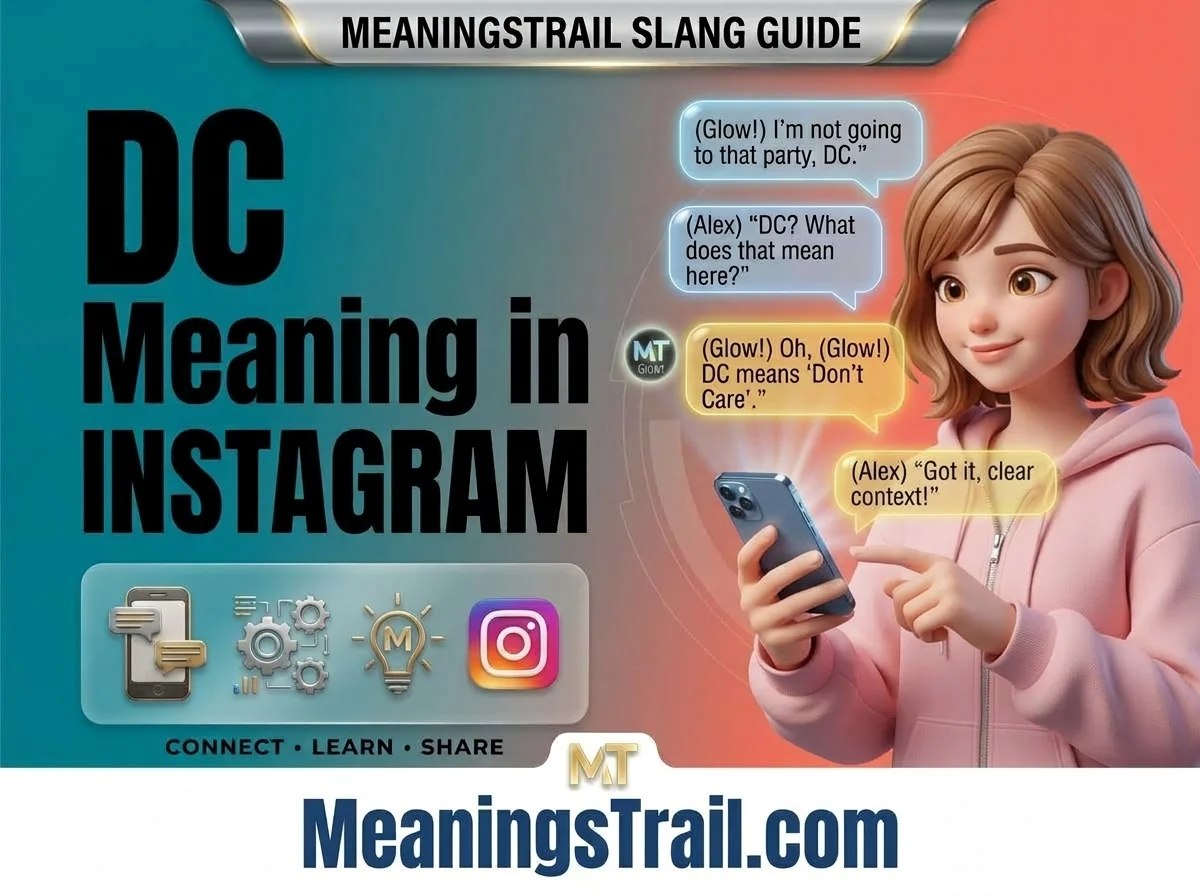
In text messages, DC most commonly means “don’t care” or “disconnect/disconnected.” “Don’t care” shows little interest or no preference, while “disconnect” is common in gaming and online chats. DC can also mean Discord, Dance Challenge, Direct Current, or Washington, D.C., so the topic and context matter.
The Most Common Meanings of “DC Meaning in Text”
“DC” is one of those short forms that can change meaning quickly. You need to look at the full message before deciding what the sender means.
1. DC Means “Don’t Care”
In casual texting, DC can mean “don’t care.”
People use it when they have no strong opinion, do not mind the choice, or simply do not want to focus on a topic.
For example:
“Do you want pizza or burgers?”
“dc”
Here, the person likely means, “I don’t care. Either one is fine.”
Another example:
“People keep talking about us.”
“dc what they say.”
This means, “I don’t care what they say.”
The tone can be relaxed, confident, or slightly cold. It depends on the rest of the conversation.
2. DC Means “Disconnect” or “Disconnected”
In gaming, group calls, Discord chats, and other online spaces, DC often means “disconnect” or “disconnected.”
Someone may say they “DC’d” when their internet stopped working or they were removed from an online session.
Example:
“Sorry, I DC’d during the match.”
This means:
“Sorry, I got disconnected during the match.”
You may also see:
“Why did you DC?”
This usually means:
“Why did you disconnect?”
This meaning is especially common when people are playing online games or using voice chat.
3. DC Can Refer to Discord
In some online communities, “DC” can be used as a short reference to Discord, especially when the surrounding conversation is already about servers, channels, or voice chats.
For example:
“Join the DC later.”
The speaker may mean:
“Join the Discord later.”
This meaning is less universal than “don’t care” or “disconnect,” so you should look at the topic before assuming it.
4. DC Can Mean Dance Challenge
On social media, particularly in content about dance trends, “DC” may stand for Dance Challenge or refer to a dance-related trend.
For example:
“New DC coming soon.”
If the post is clearly about choreography or a viral dance, “DC” may have nothing to do with “don’t care.”
This is a good example of why the platform and subject matter matter.
5. DC Can Mean Direct Current
In science, electronics, and technology, DC means direct current.
This is not slang. It is a technical term for electrical current that flows in one direction.
For example:
“The device runs on 12V DC.”
Here, “DC” clearly means direct current.
If you see words such as battery, voltage, circuit, power, or electricity, this is probably the intended meaning.
6. DC Can Mean Washington, D.C.
In conversations about travel, cities, American politics, or geography, “DC” often means Washington, D.C.
For example:
“I’m flying to DC next week.”
The person is talking about Washington, D.C., not saying “I don’t care.”
This is one of the easiest meanings to identify because the rest of the sentence usually makes it clear.
7. DC Can Refer to DC Comics
In entertainment conversations, “DC” may refer to DC Comics or its superhero universe.
For example:
“Are you more into DC or Marvel?”
Here, the person is comparing two comic-book and superhero franchises.
If the conversation mentions Batman, Superman, Wonder Woman, comics, movies, or superheroes, this meaning is likely.
8. DC Can Have a Special Meaning in a Community
Online groups sometimes create their own meanings for abbreviations. A gaming server, fandom, school group, or social media community may use “DC” in a way that outsiders do not recognize.
That is why there is no single answer that works for every message.
When you see an unfamiliar use, check the words before and after it. If you still cannot tell, simply ask what the sender means.
How “DC Meaning in Text” Is Used in Real Conversations
The meaning of “DC” can change based on where you see it. A friend may use it differently from a gamer, while a person at work may use it as a technical abbreviation.
Friends & Casual Texting
Among friends, “DC” can often mean “don’t care.”
It may be used when someone has no preference.
“Movie or bowling?”
“dc, you pick.”
This does not always mean the person is being rude. They may simply be comfortable letting you choose.
However, a short “dc” can sound colder in some situations.
“Do you even care about what happened?”
“dc.”
Here, the response may sound dismissive.
The relationship between the people matters too. Close friends may understand that “dc” is harmless, while someone you barely know may read it as rude.
Instagram & Snapchat
On Instagram and Snapchat, “DC” can have several meanings.
In ordinary DMs, it may mean “don’t care.”
“Everyone is talking about that post.”
“dc tbh.”
But social media also has its own trends and communities. In dance content, “DC” may refer to a dance challenge. In other communities, it may have another meaning.
Look at the content around the abbreviation before deciding.
A comment under a dance video is very different from a private message about someone’s opinion.
Dating Apps
On dating apps, “DC” can be confusing because tone is very important.
Someone may use it to say they have no preference:
“Coffee or dinner?”
“dc, what do you prefer?”
That can be perfectly normal.
But if someone replies “dc” to a personal question, it may feel uninterested.
For example:
“What are you looking for here?”
“dc.”
That response could suggest the person does not want to answer or is not taking the conversation seriously.
If someone you are dating sends “DC,” do not immediately assume they dislike you. Look at their other messages and their overall behavior.
Gaming & Online Communities
Gaming is one of the clearest places where “DC” can mean disconnect.
You may see:
“I dc’d again.”
“My internet keeps DCing.”
“He DC’d before the final round.”
In these examples, the person is talking about losing their connection or leaving the game.
Gamers often use short terms because they need to communicate quickly. A player in the middle of a match does not want to type a full explanation.
The same idea can appear in voice chats and online communities.
Work or Professional Chat
In professional communication, you should be careful with “DC.”
A workplace message such as:
“DC”
can be unclear because the abbreviation has many meanings.
In a technical team, DC could mean direct current, data center, or another work-specific term.
In a location discussion, DC could mean Washington, D.C.
In casual workplace chat, someone might even use it as “don’t care,” but that can sound unprofessional.
When clarity matters, write the full phrase instead.
For example, instead of:
“DC which option.”
write:
“I’m fine with either option.”
That sounds clearer and more professional.
Is “DC” Rude, Flirty, or Offensive?
“DC” is not automatically rude, flirty, or offensive. Its tone depends on the sentence, relationship, and situation.
When DC Sounds Neutral
If someone is choosing between two simple options, “DC” may simply mean they have no preference.
“Tea or coffee?”
“DC.”
The person may be saying that either choice works.
When DC Sounds Rude
“DC” can sound rude when someone uses it to dismiss a serious topic.
For example:
“I was really hurt by what you said.”
“dc.”
That response may sound uncaring.
The problem is not the abbreviation itself. It is the lack of emotional detail in a sensitive conversation.
When DC Sounds Confident
Sometimes “DC” can show that someone is not worried about other people’s opinions.
“They don’t like your new style.”
“dc what they think.”
Here, the person may be showing confidence rather than anger.
Is DC Flirty?
By itself, DC is not normally a flirty abbreviation.
If someone sends “DC” during flirting or dating, the meaning still depends on the conversation.
For example:
“Where should we go?”
“DC, surprise me.”
That can sound playful.
But:
“Do you like me?”
“dc.”
is not normally a flirty response. It may sound dismissive or uninterested.
Is DC Offensive?
“DC” is generally not an offensive term.
Still, using “don’t care” in a serious situation can hurt someone’s feelings. A harmless abbreviation can become insensitive when the subject is important.
When the topic involves grief, relationships, conflict, health, or another serious issue, it is better to use clear words.
How to Respond When Someone Says “DC”
Your response should depend on what the person means.
Casual Replies
If “DC” means “don’t care,” you can simply make the choice yourself.
“Okay, I’ll pick.”
“Cool, let’s do pizza.”
“No problem. I’ll decide.”
These replies keep the conversation moving.
Funny Replies
With close friends, you can make the response playful.
“Fine, I’m choosing the weirdest option.”
“Your lack of opinion has been noted.”
“Cool, I’m picking for both of us.”
Use humor only when you know the other person will understand it.
Neutral Replies
If you are not sure what they mean, ask.
“DC as in don’t care?”
“Do you mean you’re okay with either one?”
“What do you mean by DC here?”
These are simple ways to avoid misunderstanding.
Professional Replies
If the conversation is work-related, respond clearly.
“Understood. I’ll choose the option that works best.”
Or:
“Just to confirm, do you mean either option is acceptable?”
This removes uncertainty without making the conversation awkward.
Common Misunderstandings About “DC”
Because “DC” is so short, people can easily misunderstand it.
Assuming DC Always Means “Don’t Care”
This is the biggest mistake.
If someone says:
“I DC’d from the game.”
they almost certainly mean they disconnected.
If someone says:
“I’m going to DC next week.”
they may mean Washington, D.C.
Always read the whole sentence.
Thinking DC Always Sounds Rude
“DC” can sound blunt, but it is not always rude.
A friend saying:
“Pizza or tacos?”
“dc.”
may simply have no preference.
The same answer in a serious emotional conversation can feel much colder.
Confusing DC With IDC
“IDC” means “I don’t care.”
“DC” can also mean “don’t care,” but it has more possible meanings.
For example:
“IDC what they think.”
clearly expresses “I don’t care.”
But:
“I DC’d.”
usually refers to disconnecting.
Assuming Capital Letters Change the Meaning
“DC,” “dc,” and “Dc” can all refer to the same thing.
People often ignore capitalization in casual messages.
The context matters much more than the letter case.
Thinking Every Short Reply Has a Hidden Meaning
Sometimes “DC” is just a quick answer.
If someone says:
“Which one do you want?”
“dc.”
they may simply want you to choose.
There is no need to search for a deeper emotional meaning every time.
Similar Slang Terms You Should Know
IDC — Means “I don’t care” and is usually more direct than DC.
IDK — Means “I don’t know” and shows uncertainty rather than indifference.
IDGAF — A much stronger way to say “I don’t care,” often with a blunt or aggressive tone.
Whatever — Can mean any choice is fine, but may also sound dismissive.
NVM — Means “never mind” and is often used when someone no longer wants to explain something.
AFK — Means “away from keyboard,” usually telling others that someone is temporarily away.
BRB — Means “be right back” and suggests the person plans to return soon.
DM — Means “direct message,” usually referring to a private message on a social platform.
GTG — Means “got to go,” showing that someone needs to leave the conversation.
WYD — Means “what are you doing?” and is common in casual texting.
TMI — Means “too much information,” often used after someone shares something overly personal.
IRL — Means “in real life,” usually used to separate online activity from offline life.
When You Should Avoid Using “DC”
“DC” may be common online, but it is not the best choice in every situation.
Professional Settings
Avoid “DC” when a clear answer is needed at work.
Instead of:
“DC.”
try:
“Either option works for me.”
This is easier for everyone to understand.
Cross-Cultural Chats
Not everyone knows the same internet slang.
A person who speaks another language may not know that “DC” can mean “don’t care” or “disconnect.”
If you are speaking with someone from a different cultural or language background, use the full phrase when possible.
Clear language prevents unnecessary confusion.
Sensitive Situations
Avoid using “DC” to respond to serious personal messages.
If someone tells you:
“I’m having a really difficult day.”
replying:
“dc”
could sound harsh or uncaring.
A better response would be:
“I’m sorry. Do you want to talk about it?”
Short slang is useful for casual conversations, but sensitive moments need more care.
When the Meaning Is Unclear
Do not use “DC” when the other person could easily misunderstand you.
If you mean “disconnect,” say:
“I got disconnected.”
If you mean “don’t care,” say:
“I’m fine with either.”
The extra words can save a lot of confusion.
FAQs
What does DC mean in text?
DC commonly means “don’t care” in casual texting. In gaming and online chats, it can also mean “disconnect” or “disconnected.” The correct meaning depends on the context.
What does DC mean in texting from a girl?
If a girl sends “DC” in a normal text conversation, it may mean “don’t care.” It does not have a special meaning based on gender. Look at the full conversation to understand her intent.
What does DC mean from a guy in text?
A guy using “DC” may mean “don’t care,” especially when discussing plans or opinions. In gaming, he may mean “disconnect.” The surrounding message gives the best clue.
Does DC mean “don’t care”?
Yes. “Don’t care” is one of the common meanings of DC in casual texting. For example, “dc which one” can mean “I don’t care which one.”
Does DC mean “disconnected” in gaming?
Yes. In gaming, “DC” commonly refers to disconnecting or being disconnected from a game, server, or online session.
Is DC rude in a text message?
Not always. It can be neutral when someone has no preference, but it may sound rude or dismissive during a serious conversation. Tone depends on context.
What should I reply to DC?
If DC means “don’t care,” you can make the choice yourself. If you are unsure, ask, “Do you mean you’re okay with either?” In a professional chat, use a clear response.
Final Thoughts.
The meaning of DC in text depends heavily on context. In casual messages, it often means “don’t care.” In gaming and online communities, it can mean “disconnect” or “disconnected.” It may also refer to Discord, a dance challenge, direct current, Washington, D.C., or DC Comics.
The easiest way to understand it is to look at the words around “DC.” Think about the platform, topic, and relationship between the people talking.
If someone says “DC” while discussing dinner plans, they may simply have no preference. If a gamer says, “I DC’d,” they probably lost their connection. If someone says they are traveling to DC, they are most likely talking about Washington, D.C.
When you use the abbreviation yourself, think about whether the other person will understand it. Slang is great for quick, casual chats, but clear words are better when the topic is serious or professional.
A little attention to context can make your texting clearer, kinder, and much easier to understand.

Grace Wilson is a passionate writer and language enthusiast who enjoys exploring word meanings and making complex ideas easy to understand.